Engaging Your Pet's Mind
Engaging Your Pet's Mind
——The Benefits of Interactive Problem-Solving Toys
In the quest to keep our pets happy and healthy, many pet owners focus on physical exercise, often overlooking the importance of mental stimulation. Interactive problem-solving toys offer a unique way to engage your pet's mind, providing both entertainment and cognitive challenges. From puzzle feeders to treat-dispensing toys, these innovative tools can significantly enhance your pet's quality of life.
1.The Importance of Mental Stimulation
Mental stimulation is crucial for a pet's overall well-being.
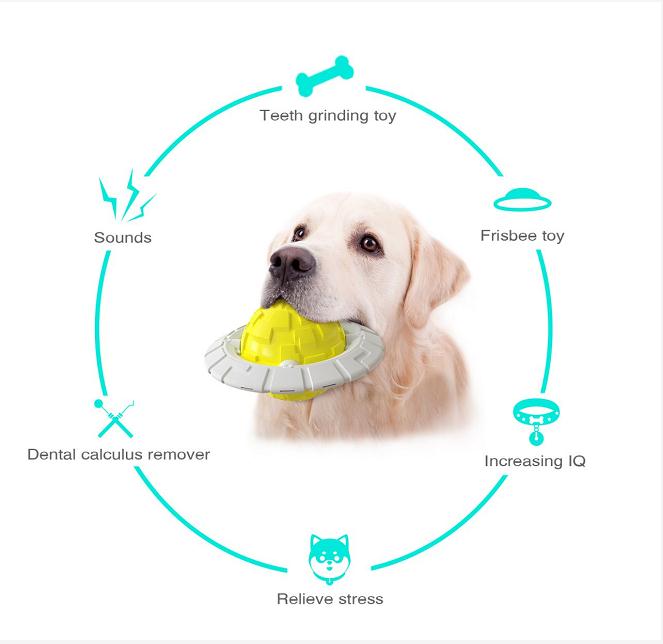
- Cognitive Health:
1)Stimulating the Brain: Just like humans, pets need mental stimulation to keep their brains active. Problem-solving activities challenge pets to think, make decisions, and learn new skills, which helps prevent cognitive decline.
2)Preventing Boredom: Boredom can lead to behavioral issues in pets. When pets are mentally engaged, they are less likely to exhibit destructive behaviors out of sheer restlessness or lack of stimulation.
3)Enhancing Memory: Problem-solving toys or tasks often require pets to remember certain actions or sequences to achieve a reward. This helps improve their short-term memory and, over time, can contribute to better long-term memory retention.
4)Promoting Adaptability: As pets navigate through various challenges, they learn to adapt to new situations and changes in their environment. This adaptability is crucial for maintaining cognitive flexibility as they age.
5)Reducing Anxiety and Stress: Mentally stimulating activities can help reduce anxiety and stress in pets, which is beneficial for overall brain health. Stress can have a negative impact on cognitive function, so alleviating it through problem-solving can be protective.
6)Encouraging Physical Activity: Many problem-solving activities also involve physical movement, such as searching for hidden treats or manipulating toys. This combination of mental and physical engagement is beneficial for overall health and can help prevent the physical decline that can accompany cognitive issues.
7)Slowing Cognitive Decline: As pets age, they may naturally experience a decline in cognitive function. Regular mental exercises can slow this process, similar to how brain games and puzzles can help humans maintain cognitive health in their senior years.
8)Improving Quality of Life: Ultimately, keeping pets mentally active through problem-solving activities can significantly improve their quality of life. It can make them happier, more content, and more connected with their environment and their human companions.
9)Facilitating Social Interaction: Some problem-solving activities can be turned into social events, encouraging interaction between pets and their owners or other pets. This social engagement is another important factor in maintaining cognitive health.
10)Providing a Sense of Achievement: Successfully solving a problem can give pets a sense of achievement and reward, reinforcing positive behaviors and bolstering their confidence, which in turn positively affects their mental state.
- Behavioral Benefits:
1)Engaging the Brain: Just as humans seek engaging activities to occupy their minds, pets also require mental challenges. When pets are given tasks that engage their brains, they are less likely to succumb to boredom.
2)Diverting Attention: Mental stimulation provides a healthy outlet for a pet's energy and attention. Instead of focusing on anxious thoughts or destructive behaviors, they are occupied with solving puzzles or participating in interactive play.
3)Building Confidence: Successfully overcoming mental challenges can boost a pet's confidence. This increased self-assurance can reduce anxiety levels and the likelihood of exhibiting anxious behaviors such as excessive barking or chewing.
4)Encouraging Positive Behavior: When pets are mentally stimulated, they are more likely to engage in positive behaviors. For example, a dog that is given a puzzle toy to work on is less likely to chew on furniture.
5)Preventing Monotony: A routine that includes a variety of mental stimulation helps prevent monotony. Pets that experience a diverse range of activities are less prone to the repetitive, destructive behaviors often associated with boredom.
6)Reducing Stress: Anxiety can be a significant contributor to behavioral issues in pets. Mental stimulation can help reduce stress by providing a calming focus, which can be particularly beneficial for pets with high anxiety levels.
7)Enhancing Learning: Mentally stimulating activities often involve learning new skills or behaviors. This learning process not only keeps the pet's mind sharp but also reinforces the bond between the pet and owner, as they work together to achieve goals.
8)Promoting Physical Activity: Many mental stimulation activities also involve physical movement, which can help tire pets out, reducing the energy they might otherwise expend on destructive behaviors.
9)Increasing Social Interaction: Some forms of mental stimulation, such as training sessions or interactive games with owners, can increase social interaction. This social bonding can help alleviate anxiety and reduce the likelihood of behavioral issues.
10)Providing Novelty: Introducing new toys, puzzles, or games can provide a sense of novelty, which is particularly important for pets that may become bored with their usual surroundings or toys.
11.Creating a Sense of Achievement: When pets successfully complete a mentally stimulating task, they often receive a reward, which creates a sense of achievement. This positive reinforcement can help reduce anxiety and discourage destructive behaviors.
12.Supporting Cognitive Health: Long-term mental stimulation is beneficial for maintaining cognitive health as pets age. Pets with healthy cognitive function are less likely to develop anxiety-related behaviors.
2.Puzzle Feeders
Puzzle feeders are a popular choice for pets that enjoy a challenge.
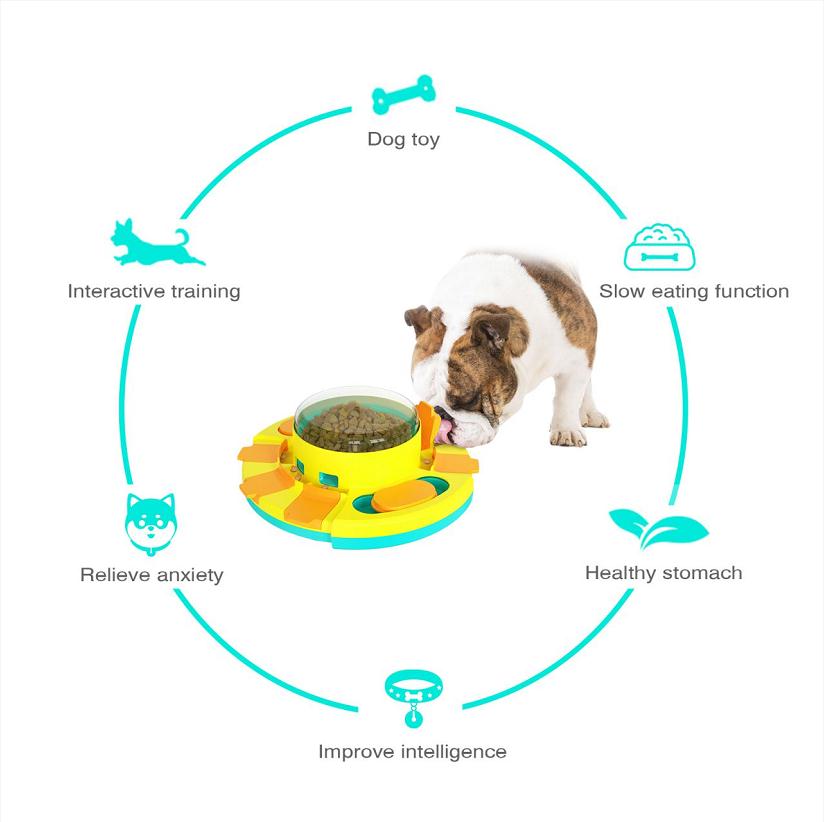
- How They Work
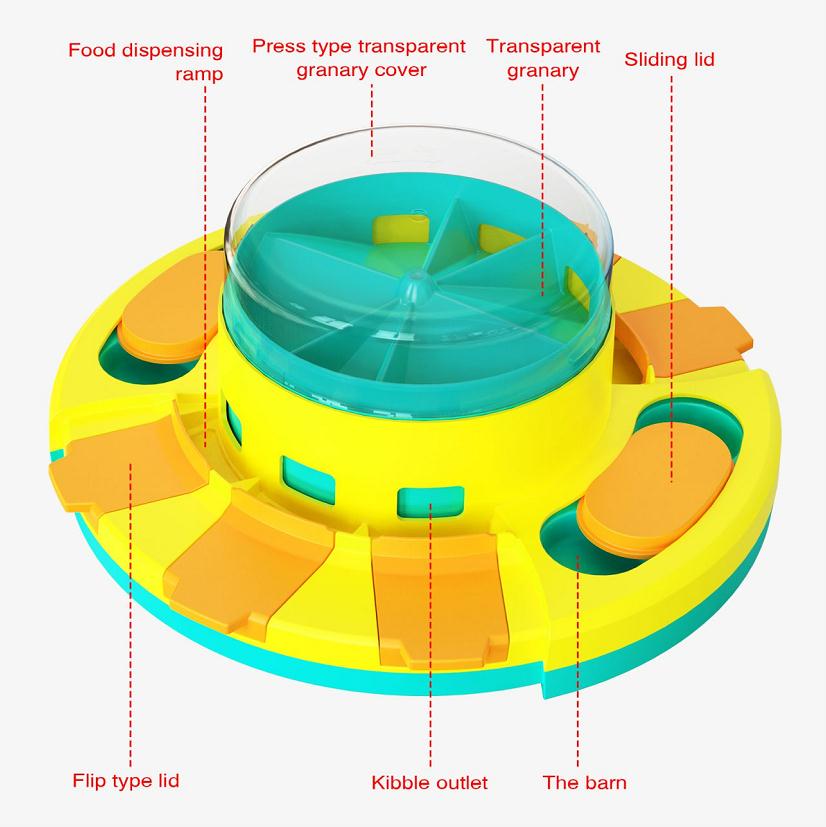
1)Mechanical Manipulation: Many puzzle feeders involve mechanical components that pets must manipulate. For example, a pet might need to slide a panel, turn a wheel, or lift a lid to release the food or treats.
2)Foraging Simulation: These toys mimic the natural foraging behavior of pets, encouraging them to search for and retrieve food, just as they would in the wild. This simulation can be highly motivating and engaging for pets.
3)Problem-Solving Skills: Puzzle toys challenge pets to use their problem-solving skills. They must figure out the correct sequence of actions or the right way to manipulate the toy to access the food or treats.
4)Treat Dispensing Mechanisms: Some puzzle feeders have treat-dispensing mechanisms that are triggered by specific actions. For instance, a pet might need to push a button or align two parts of the toy to release a treat.
- Benefits
1)Feeding Delay: The process of solving the puzzle typically delays the feeding, extending mealtime and making it a more interactive and rewarding experience. This can be particularly beneficial for pets that eat too quickly.
2)Variable Difficulty Levels: Many puzzle feeders offer adjustable difficulty levels, allowing pet owners to tailor the challenge to their pet's skill level and ensure the toy remains engaging as the pet learns.
3)Portion Control: Some models allow pet owners to control the amount of food or treats dispensed with each puzzle solved, which can be helpful for managing a pet's diet and weight.
4)Sensory Stimulation: In addition to the physical challenge, some puzzle toys also incorporate sensory elements, such as different textures or sounds, which can further stimulate a pet's curiosity and engagement.
5)Social Interaction: Some puzzle toys are designed for group play or can be used as a tool for interaction between the pet and its owner, fostering a stronger bond and social connection.
6)Mental Exercise: The mental exercise provided by puzzle feeders can help keep a pet's mind sharp, reduce stress, and prevent boredom, which is especially important for pets that spend a lot of time indoors.
7)Health Benefits: Engaging in problem-solving activities with puzzle feeders can also have physical health benefits, as it encourages movement and can help prevent obesity by slowing down the eating process.
3. Treat-Dispensing Toys
Treat-dispensing toys offer a fun way to reward your pet while also challenging their problem-solving skills.
- Types of Toys
1)Puzzle Boxes: These are containers with compartments that pets must figure out how to open to access the treats inside. They often involve lifting lids, sliding doors, or turning knobs.
2)Maze Toys: These toys feature a maze or network of tunnels where treats are placed. Pets must navigate the maze by rolling or sliding the toy to move the treats to the exit, where they can be accessed.
3)Treat Dispensers with Moving Parts: Some toys have parts that move or rotate, and pets must manipulate these parts in a certain way to release the treats. This could involve spinning a wheel, flipping a panel, or aligning shapes.
4)Bottle or Tube Toys: These toys resemble bottles or tubes with holes or openings that can be blocked or unblocked. Pets must figure out how to position the toy or move the treat within to get it out through the opening.
5)Treat-Dispensing Balls: These are typically hard balls with holes that allow treats to fall out as the ball rolls around. The size and number of holes determine how easily treats are dispensed, adjusting the difficulty level.
6)Peek-a-Boo Toys: These toys have hiding spots or compartments where treats are placed. Pets must figure out how to reveal the treats, which might involve lifting flaps, pushing buttons, or moving parts of the toy.
7)Interactive Feeders: Some treat-dispensing toys are designed to be filled with a pet's regular food and can be set to release small portions as the pet interacts with the toy. This can be particularly useful for encouraging slow feeding and preventing overeating.
8)Sound-Activated Toys: These toys release treats when a pet makes a noise, such as barking or meowing. They can be a fun way for pets to learn that their vocalizations can have an effect on their environment.
9)Treat-Dispensing Plush Toys: For pets that enjoy the softness of plush toys, there are versions that have treat compartments. Pets must figure out how to access the treats, which might involve unzipping, untieing, or biting through the fabric.
10)Spring-Loaded Toys: These toys have a spring mechanism that pets must activate to release the treats. They might need to press down on a lever, push a button, or apply weight to a specific part of the toy.
11)Treat-Dispensing Mat Toys: These are mats with various textures and compartments where treats can be hidden. Pets must manipulate the mat, using their paws or snouts to uncover the treats.
12)Electronic Treat Dispensers: Some advanced models are electronic and can be programmed to release treats at certain times or in response to specific actions, such as touching a sensor.
- Training Opportunities
1)Positive Reinforcement: The primary role of treat-dispensing toys in training is to offer positive reinforcement. When a pet performs a desired behavior, they are rewarded with a treat from the toy, which encourages them to repeat the behavior.
2)Increased Motivation: The element of fun and challenge in treat-dispensing toys can increase a pet's motivation to participate in training sessions. The anticipation of receiving a treat can make training more engaging and enjoyable.
3)Behavior Shaping: Trainers can use these toys to help shape behaviors incrementally. For example, a dog might first be rewarded for simply approaching the toy, then for interacting with it, and finally for performing a specific trick to obtain the treat.
4)Teaching Impulse Control: Some treat-dispensing toys can be used to teach pets impulse control. For instance, a pet might need to wait for a treat to be released or resist the urge to grab it before it's released.
5)Encouraging Problem-Solving: As pets learn how to operate the treat-dispensing toy to get the reward, they are encouraged to think and solve problems. This cognitive engagement can be a valuable part of training.
6)Building Confidence: Successfully obtaining a treat from a toy can help build a pet's confidence. This is particularly useful when teaching new or challenging behaviors.
7)Reducing Training Time: By keeping pets engaged and motivated, treat-dispensing toys can help reduce the time needed for training sessions. Pets are more likely to learn quickly when they are enjoying the process.
8)Diversifying Training: Incorporating treat-dispensing toys into training sessions can add variety and prevent monotony. This can keep pets interested and excited about training.
9)Handling Sensitive Behaviors: For pets that are hesitant or fearful of certain objects or actions, treat-dispensing toys can be used to create positive associations and reduce fear.
10)Spaced Repetition: Treat-dispensing toys can be used to provide treats at intervals during training, reinforcing the behavior multiple times in a single session.
11)Transitioning from Lure Rewards: They can help transition pets from being directly lured with treats to performing behaviors independently, by gradually increasing the level of difficulty to perform for the reward.
12)Generalization of Behaviors: Once a behavior is learned with the help of a treat-dispensing toy, trainers can work on generalizing it to different environments or without the toy present.
13)Incorporating Real-Life Scenarios: Some treat-dispensing toys can be designed to mimic real-life scenarios that a pet might encounter, helping to prepare them for those situations.
14)Weaning Off Treats: Once a behavior is well-established, trainers can gradually reduce the frequency of treat dispensing from the toy, helping pets transition to performing behaviors without the need for treats.
4.Choosing the Right Toy
Selecting the right toy is essential for ensuring a positive experience for both pet and owner.
- Age and Breed
Advise on choosing toys that are appropriate for the pet's age, breed, and size, considering factors such as durability and safety.
- Interest Level
Suggest selecting toys that match the pet's interest level and activity preferences, ensuring they will be engaged and motivated.
5.Safety Considerations
While these toys can be incredibly beneficial, safety should always be a priority.
- Supervision
To ensure they are used correctly and safely.
- Cleaning
1)Preventing Bacterial Growth: Treat-dispensing toys, especially those made from porous materials or with crevices, can harbor bacteria if not cleaned regularly. Bacterial growth can lead to infections or illnesses in pets.
2)Avoiding Odors: Over time, food and saliva residues can cause unpleasant odors. Regular cleaning helps to eliminate these smells and keep the toys fresh.
3)Upping the Durability: Dirt and grime can accelerate the wear and tear of toys. Cleaning them properly can prolong their lifespan and keep them in good condition for your pet to use.
4)Ensuring Treat Safety: If treats become contaminated by bacteria in the toy, they can pose a health risk to your pet. Regular cleaning ensures that the treats dispensed are safe for consumption.
5)Maintaining Pet Health: Pets with sensitive stomachs or allergies can be particularly susceptible to health issues caused by dirty toys. Keeping toys clean is part of maintaining your pet's overall health.
6)Promoting Good Hygiene Habits: Regular cleaning of toys sets a standard of hygiene that can help prevent the spread of germs and diseases in a household with multiple pets.
7)Removing Stains: Some toys may develop stains from treats or saliva. Cleaning can help to keep the toy looking new and prevent unsightly marks from becoming permanent.
8)Avoiding Mold and Mildew: In damp conditions, mold and mildew can grow in toys, especially those that are fabric-based or have been left wet. Regular cleaning and drying can prevent these issues.
9)Ensuring Proper Functioning: Buildups of food and debris can affect the functioning of the toy's treat-dispensing mechanism. Cleaning can ensure that the toy operates as intended.
10)Improving Pet Enjoyment: A clean toy is more appealing to pets. If a toy is sticky or has a bad smell, a pet may lose interest in it.
11)Safeguarding Against Pests: Dirty toys can attract pests like insects or rodents, which can bring additional health risks to your pet.
12)Adhering to Cleaning Instructions: It's important to follow the manufacturer's cleaning instructions to avoid damaging the toy. Some toys may be dishwasher safe, while others require hand washing.
13)Scheduling Regular Check-ups: Along with cleaning, it's a good idea to regularly inspect toys for signs of wear or damage that might indicate the toy needs to be replaced.
14)Creating a Cleaning Routine: Establishing a routine for cleaning treat-dispensing toys can help ensure that they are consistently maintained and ready for use.
Interactive problem-solving toys are a fantastic addition to any pet's play routine. They not only provide entertainment but also contribute to the pet's cognitive health and overall well-being. By choosing the right toys and ensuring they are used safely, pet owners can enrich their pets' lives and strengthen their bond.
The Ultimate Pet Backpack Guide
Our Story
Related Article